Every year, tens of thousands of university students pack their bags with a double aim: to live one of the most enriching experiences of their lives and to return home speaking English fluently. However, a recurring question arises among families, teachers and academics: do you really learn the language, or is it simply a myth sweetened by the festive, international spirit?
What the figures say: an undeniable quantitative leap
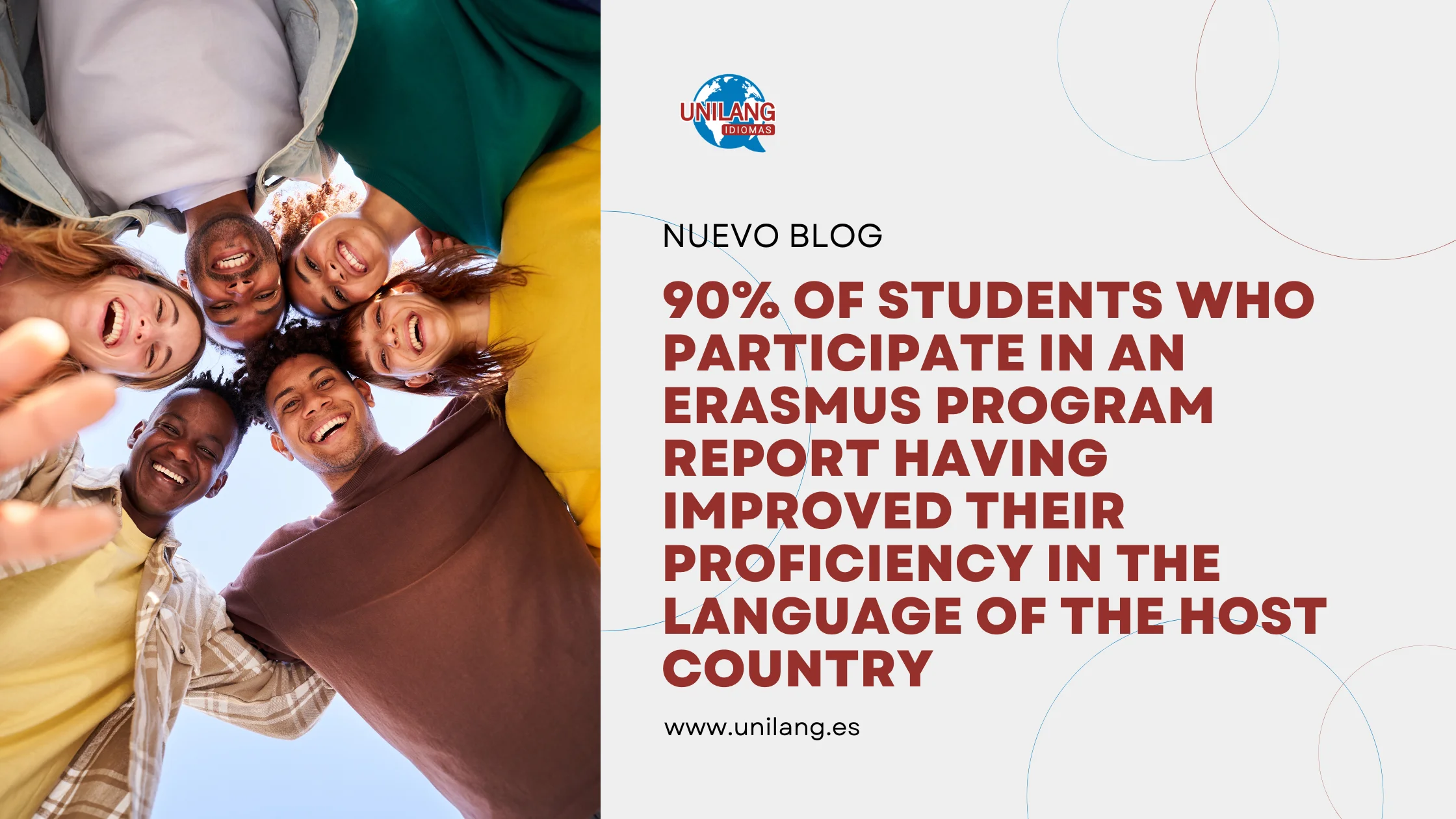
Against the scepticism of those who believe that international mobility stays are nothing more than a period of leisure, empirical evidence reflects a very different reality. According to data from the Spanish Service for the Internationalisation of Education (SEPIE), 90% of students who take part in an Erasmus programme say they have significantly improved their level of the language of the destination country or the vehicular language in which they study.
The linguistic benefit is not limited to a subjective impression at the end of the stay. According to the international report Erasmus Impact Study, prepared by the European Commission, the proportion of students able to work in a second language rises from 40% before starting mobility to 65% after completing the experience. The learning process ranges from losing stage fright when speaking in public to gaining mental agility and improvisation skills in multicultural settings.
The phenomenon of "Erasmus English" and the danger of the bubble
However, linguists and sociologists do qualify the figures. Learning English abroad does not happen automatically or by osmosis. There is a latent risk faced by most students: the temptation to settle into the "language bubble".
Socialising only with students from the same country of origin or limiting oneself to so-called "Erasmus English" —a simplified intermediate code with imprecise grammar and basic vocabulary among non-native speakers— slows the development of a truly professional level.
"Erasmus gives you the perfect tools to loosen up and gain fluency, but if you spend most of your free time speaking your mother tongue, the qualitative leap stalls", say experts in mobility and immersion. To achieve a B2/C1 level or technical mastery, it is essential to break out of the comfort group, integrate with native speakers and actively participate in local social and university life.
An indispensable strategic asset for the job market
Beyond language improvement, the combination of fluency and international adaptability has become one of the most sought-after competencies by recruitment departments across Europe.
In this regard, according to the European Commission’s Directorate-General for Education and Culture in its study on employability and the impact of mobility, 92% of recruitment managers say they value very highly the personality traits and transferable skills fostered by the Erasmus programme, such as resilience, the ability to solve problems in other languages, and adaptability.
Conclusion
The answer to whether you really learn English on Erasmus is yes, but with crucial caveats. The stay acts as an extraordinary catalyst that removes psychological barriers and accelerates learning like no traditional language school can. However, the level of mastery achieved will ultimately depend on individual attitude: real fluency and professional proficiency are only won if you decide to step out of your comfort zone.