Learning languages is no longer an option, but a global necessity
The ability to communicate in several languages has become one of the most valuable skills of the 21st century. In an increasingly connected, multicultural and mobile world, mastering different languages not only opens up career opportunities, but also improves learning, fosters inclusion and helps preserve the cultural richness of societies.
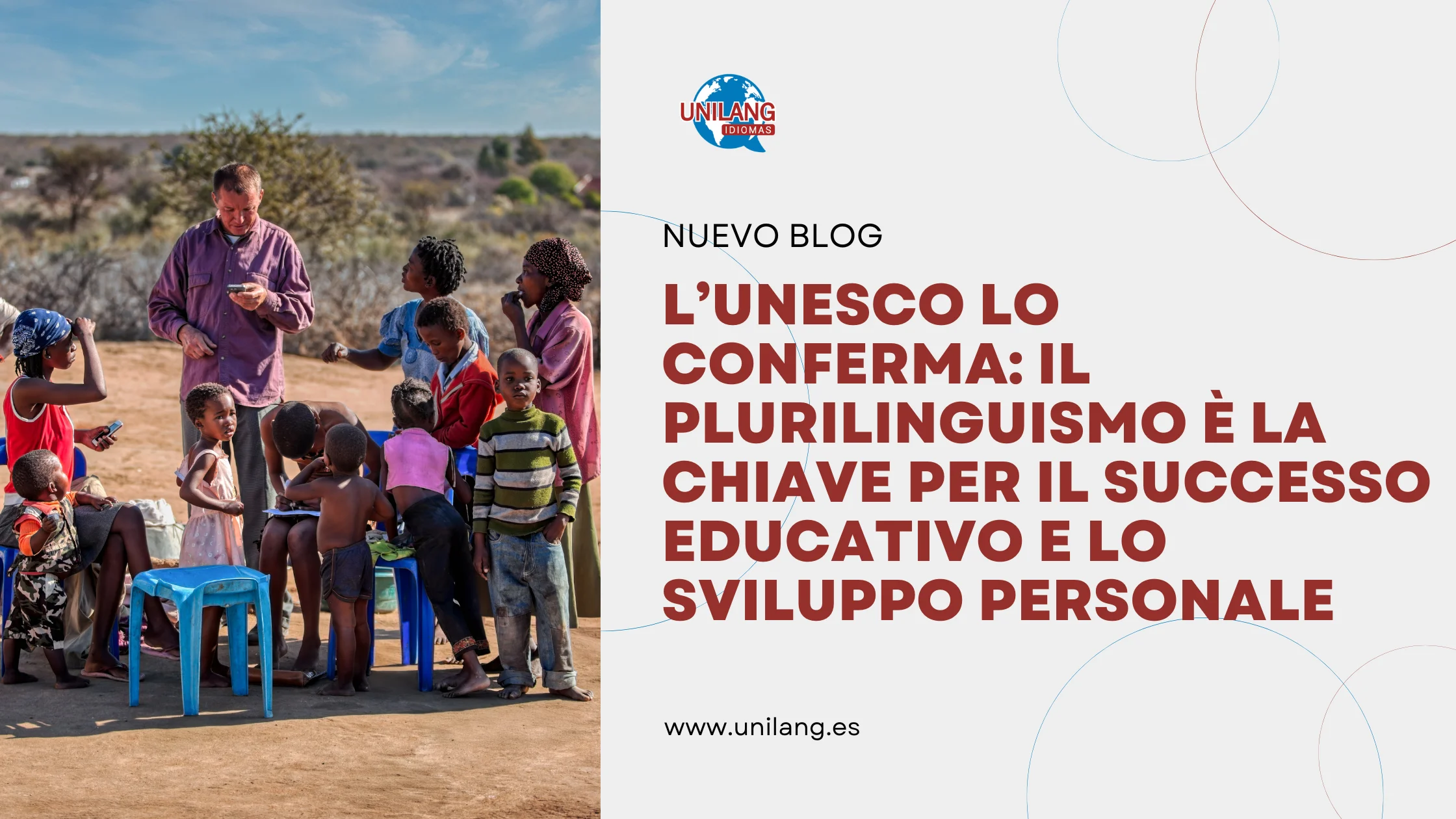
This reality has recently been highlighted by UNESCO in its report "Languages matter: Global guidance on multilingual education", published on the occasion of International Mother Language Day. The document makes clear the urgent need to integrate multilingualism into education systems to ensure that all children can learn in a language they understand.
A challenge affecting millions of students
According to data collected by UNESCO, around 40% of the world’s population does not have access to education delivered in a language they speak fluently. In some middle- and low-income countries, this figure reaches as high as 90%.
In total, more than 250 million students face learning difficulties caused by language barriers.
The situation is especially relevant in a context marked by increasing international migration. It is becoming more and more common to find classrooms where students with different mother tongues coexist, which poses new challenges for education systems, but also new opportunities to promote a more inclusive education.
Why is multilingual education so important?
For decades, UNESCO has advocated education based on the mother tongue as a starting point for learning. Studies show that students who begin their education in a language they know develop fundamental skills such as reading, writing and comprehension more easily.
In addition, initially learning in the mother tongue later makes it easier to acquire other languages. According to the report, the combination of solid instruction in the language of origin together with the gradual introduction of a second language leads to better academic results in areas as diverse as mathematics, science and reading comprehension.
Experts recommend maintaining instruction in the mother tongue during the first six or eight years of schooling, introducing a second language first as a subject and later as a medium of learning.
More languages, better results
The benefits of multilingualism are not only educational. Numerous studies have shown that people who speak several languages develop greater cognitive flexibility, better problem-solving abilities and more ease in adapting to new environments.
In addition, learning languages fosters cultural empathy, broadens understanding of the world and facilitates communication between people from different backgrounds.
In a city open to tourism, international business and student mobility such as Santander, these skills are becoming increasingly valuable both academically and professionally.
Africa: an example of how bilingualism improves learning
UNESCO’s report includes several success stories in Africa that demonstrate the positive impact of bilingual education.
Children who are taught in a familiar language are 30% more likely to correctly understand texts at the end of primary education than those who study in an unfamiliar language.
One of the most notable examples is Mozambique, where the implementation of bilingual education programmes in primary schools increased learning rates by 15%.
Experience shows that when students can express themselves in a language they master, they participate more actively in class, gain confidence and acquire knowledge more quickly.
Language diversity is also cultural heritage
There are currently around 7,000 spoken and sign languages in the world, but only 351 are used as languages of instruction. In addition, according to UNESCO’s World Atlas of Languages, a language disappears every two weeks.
The loss of a language also means the disappearance of knowledge, traditions and unique ways of understanding the environment.
For this reason, multilingual education not only contributes to academic success, but also helps preserve the cultural diversity and linguistic heritage of communities.
Learning languages to build a global future
UNESCO’s conclusions reinforce an idea increasingly present in education: learning languages is an investment in the future.
Mastering several languages facilitates access to academic and career opportunities, improves intercultural communication and prepares people to navigate successfully in a globalized society.
At Unilang Idiomas, we believe that every new language is a door opening onto the world. That is why we work to help children, young people and adults develop language skills that allow them to grow personally and professionally, communicate with confidence and make the most of all the opportunities offered by an international environment.
Because languages matter. And learning them is one of the best tools for understanding the world and becoming part of it.